
Gaining Independence While Tube Feeding

-
Getting comfortable with tube feeding at home is a process, and this guide is here to walk you through it. Whether you are brand new to tube feeding or looking to feel more confident in your routine, here is what you will find inside:
Give Yourself Grace — Why the early weeks are a learning period and what to expect as things start to click
Know Your Setup — How to understand your formula, feeding method, equipment, and flushing routine inside and out
Own Your Schedule — Practical tips for managing your feeding schedule around your daily life
Organize Your Supplies — Simple habits to keep your home stocked, organized, and ready for anything
Feeding on the Go — How to manage tube feeding outside the home with confidence
Travel Tips — What you need to know before taking a longer trip with a feeding tube
Social Situations — Navigating mealtimes, gatherings, and the emotional side of eating differently
Troubleshoot Like a Pro — Knowing what you can handle at home and when it is time to call your care team
Starting tube feeding at home comes with a lot of new information to absorb. Between learning your equipment, managing your schedule, and figuring out how daily life fits together, it is easy to feel like you have a full-time job just keeping up.
The good news is that with time and practice, most people find that tube feeding becomes a manageable part of their routine rather than the center of it. This guide walks through the practical steps that help you build confidence and independence, one day at a time.
Give Yourself Time to Learn
The early weeks of tube feeding at home are a learning period, and it helps to approach them that way. You are acquiring a new set of skills, and like any skill, it takes repetition before things start to feel natural.
In the beginning, it’s normal to rely heavily on your care team, a home health nurse, or a family member to help you get through feeds. That support is there for a reason. As you practice and get comfortable with your routine, you will need less guidance and feel more capable handling things on your own. There is no set timeline for this, and it looks different for everyone. The important thing is to keep practicing and keep asking questions until you feel confident.
Know Your Own Setup
Before independence is possible, understanding your specific tube feeding setup is essential. Not everyone's situation is the same. Your formula, feeding method, rate, and equipment may look completely different from someone else's. Getting to know the details of your own plan gives you a solid foundation to build on.
Formula
Know the name of your formula, how many calories it provides per serving, and your daily goal. Write this information down and keep it somewhere accessible, whether that is a notebook, your phone, or a sheet on the refrigerator.
Feeding Method
There are a few ways tube feeds can be delivered. Continuous feeds run slowly over several hours through a pump. Bolus feeds deliver a larger amount over a shorter time using a syringe or gravity bag. Each method has its own process, and practicing until each step feels routine is important. If anything feels unclear, ask your nurse or dietitian to walk through it with you again.
Equipment
Learn what each piece of your equipment does and how it works together. Know how to connect and disconnect tubing, prime your pump if you use one, and set up a feed from start to finish without assistance.
Flushing
Flushing your tube with water before and after each feed is one of the most important habits you can build. It helps prevent clogs and keeps your tube functioning properly. Know how much water to use and when and make it a non-negotiable part of every feed.
If anything about your setup is unclear, reach out to your care team. There are no questions too small when you are learning something this important.
Taking Ownership of Your Schedule
Managing your feeding schedule independently is one of the biggest practical steps toward feeling in control of your care.
Start by writing out your full daily schedule, including what time each feed begins, how long it runs, how much formula and water you use, and any medications that go through the tube. Keep this written somewhere visible until it is fully memorized.
From there, think about how to build your feeding schedule around your daily life rather than the other way around. If your current schedule does not line up well with work, school, or sleep, talk to your dietitian. Many people have more flexibility in timing than they realize, and small adjustments can make a meaningful difference in quality of life.
Setting phone alarms for feeds and flushes is a reliable method that many experienced tube feeders continue to use long term. It removes the mental load of tracking time and helps prevent missed feeds during busy days.
Organizing Supplies at Home
Feeling prepared at home starts with having your supplies organized and well stocked. Running low on formula or realizing a key supply is missing can create unnecessary stress, and most of it is preventable with a little planning.
A few habits that help significantly:
Understand your delivery schedule
Most home tube feeding supplies come through a specialty pharmacy or durable medical equipment company. Know how often deliveries happen, what the reorder process looks like, and who to contact about your order.
Keep a simple inventory
Once a week, check your supply levels and note anything that is getting low. This does not need to be time consuming or complicated. A basic list on paper or in your phone works well.
Create a dedicated space
Keeping all your tube feeding supplies in one organized location makes setup and cleanup faster and reduces the chance of misplacing something important.
Plan for problems before they happen
Talk with your care team about what to do if your pump malfunctions, if a shipment is delayed, or if you run out of a specific item unexpectedly. Having a plan in place before a problem occurs makes it much easier to handle when it does.
Feeding on the Go
Getting out of the house is one of the areas where people often feel most uncertain, and it is also where many people discover how manageable tube feeding away from home can be. With preparation, feeding on the go becomes routine.
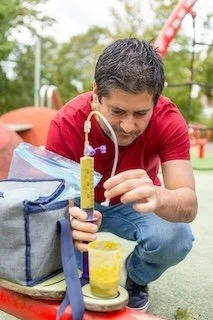
Bolus feeds offer the most flexibility for outings
If your care team has cleared you for bolus feeding, this method is generally the easiest to manage outside the home because it does not require a pump or a power source. A syringe, your formula, and water for flushing are all you need.
Pump users should plan around their equipment
Know how long your pump's battery lasts and whether it can be used with a portable battery pack. When going out, pack extra tubing, a syringe, and water in case something needs to be flushed or replaced.
Know the storage guidelines for your formula
Once opened, most formula must be refrigerated and used within a specific window of time, usually 24 to 48 hours. Closed, ready-to-hang systems typically last longer. Understanding these guidelines is important when planning time away from home.
You are allowed to manage your health needs anywhere
Tube feeding in public, whether at a restaurant, a waiting room, or a family gathering, is a normal part of life for many people. If you prefer privacy, a light blanket or wrap can help. With time, most people find that managing feeds in different settings becomes second nature.
Planning for Longer Trips
Travel is possible with tube feeding. Many people fly, take road trips, and spend extended time away from home without significant difficulty. It requires more advance planning, but it is well within reach.
Calculate your formula needs carefully
Figure out exactly how much formula you will need for the trip and bring extra to account for delays or unexpected changes in your schedule. Aim for at least one to two extra days of supply.
Traveling by plane with formula
Formula is considered a medical liquid and is generally exempt from standard liquid restrictions when traveling domestically in the United States. Bringing a letter from your doctor explaining your tube feeding situation is helpful, and notifying TSA at the security checkpoint allows the process to go smoothly. Most people move through without significant issues.
Keep formula at the right temperature
If your formula needs refrigeration, insulated cooler bags with ice packs work well for shorter trips. For longer travel, ask your dietitian whether switching to a shelf-stable formula option temporarily makes sense for your situation.
Carry medical documentation
A brief letter from your physician outlining your diagnosis, tube type, and feeding needs is useful to have on hand, especially for international travel or if you need medical attention while away from home.
Research your destination in advance
Know the location of the nearest pharmacy or medical supply store at your destination. Have a way to reach your care team remotely in case questions or concerns come up while you are traveling.
For more advice, read our blog “Traveling with a Feeding Tube”.
Social Situations and Mealtimes
Food is a central part of many social gatherings, and adjusting to tube feeding can bring up mixed feelings around mealtimes, gatherings, and dining out. It is okay to feel some grief or frustration. Many people go through a period of adjustment, and those feelings are valid.
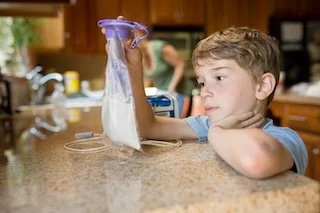
Continuing to show up to social occasions matters. Being present at a dinner or celebration is valuable regardless of whether you are eating the same way as everyone else. Most people in your life will take their cues from you. When you approach your tube feeding with matter-of-fact confidence, others tend to follow.
Having a simple, prepared response for questions from people who are not familiar with tube feeding can help reduce awkward moments. Something straightforward, such as explaining that you have a medical condition that affects how you eat and that you do just fine with your tube, is usually enough.
Connecting with others who tube feed can be extremely meaningful, especially during the first year. Online communities, support groups, and social media groups exist specifically for tube-fed individuals and their families. Hearing how others navigate daily life with a tube can offer both practical ideas and a sense of not being alone in the experience.
To discover ways to connect with the tube feeding community, read or blog “Resources for Patients & Caregivers”.
Knowing When to Troubleshoot and When to Call for Help
Part of being independent is knowing how to assess a situation and respond appropriately. Some issues can be handled at home. Others need medical attention.
Situations you may be able to handle at home after proper training:
A mild tube clog can often be resolved by flushing with warm water using gentle, steady pressure.
Tubing that is running slowly should be checked for kinks before assuming something more serious is wrong.
Minor skin irritation around the tube site can often be managed with gentle cleaning and allowing the area to air dry.
Situations that warrant a call to your care team:
A clog that does not clear with flushing attempts
Skin that appears red, swollen, warm, or has unusual discharge
Persistent nausea, vomiting, or discomfort during or after feeds
A tube that is not functioning normally
Leaking around the tube site that is more than typical for you
Situations that require urgent or emergency care:
A tube that has fully come out, particularly if it is a newer tube, since the stoma can close quickly
Signs of infection such as fever, significant pain, or pus at the tube site
Any difficulty breathing or choking connected to a feed
Knowing this information in advance means you are more likely to respond calmly and appropriately when something comes up, rather than either dismissing it or panicking unnecessarily.
Building Confidence Over Time
Independence with tube feeding does not happen all at once. It builds gradually through repeated practice, growing familiarity with your equipment, and small successes along the way. Every feed you manage on your own, every outing you navigate, and every problem you troubleshoot adds to your confidence and your capability.
Working closely with your dietitian and the rest of your care team throughout this process is important, especially in the first several months. They can help you adjust your schedule, simplify your routine, and make changes that better support your daily life. Do not hesitate to bring up things that feel difficult or inconvenient. Your care team wants your tube feeding to work well within your actual life, and they can often offer solutions you would not have thought to ask about.
With time, most people who tube feed reach a point where it feels like a manageable part of their day rather than an obstacle to living it. That point is ahead of you, and every step you take toward learning and practicing gets you closer to it.