
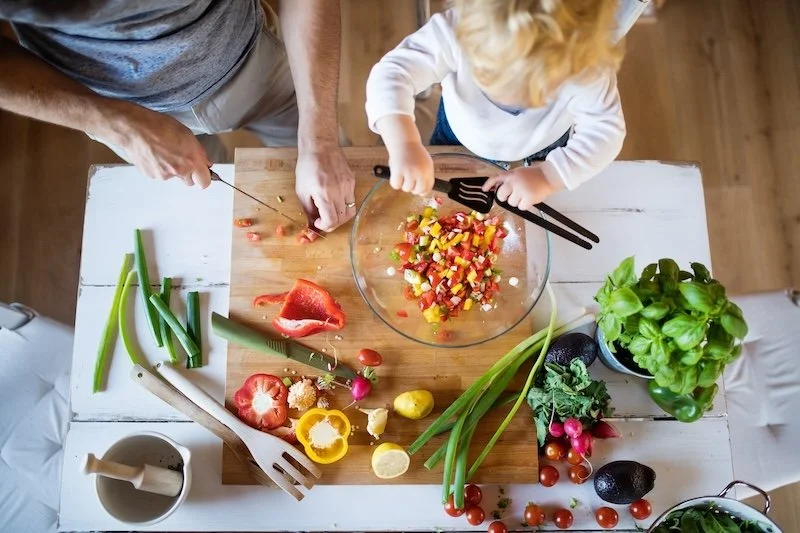
March is National Nutrition Month, and there's no better time to turn healthy eating from a dinnertime battle into something kids look forward to.
Let's be real: telling a seven-year-old that spinach is "good for their body" rarely ends with them asking for seconds. But here's the thing: kids don't need a lecture about macronutrients. They need color, creativity, and a reason to care. And with the right approach, nutrition doesn't just become tolerable for kids. It becomes something to look forward to.
This month, we're breaking down everything you need to know about making healthy eating engaging for children and why building a positive relationship with food matters more than getting them to eat their vegetables.
Why a Healthy Relationship With Food Matters More Than a Perfect Diet
Before we talk tips and tricks, let's zoom out for a second. The goal of teaching kids about nutrition isn't to raise children who can recite the food pyramid. It's to raise kids who grow up trusting their bodies, enjoying a wide variety of foods, and not feeling guilty or anxious around eating.
Research consistently shows that children who develop a positive, curious relationship with food early in life are more likely to maintain balanced eating habits as adults. On the flip side, kids who are forced to "clean their plate" or told certain foods are "bad" often develop complicated feelings around eating, feelings that can follow them for decades.
Creating a healthy food relationship means:
Letting kids have some say in what they eat (within reason)
Talking about food with curiosity, not fear
Avoiding labeling foods as strictly "good" or "bad"
Making mealtimes feel safe, fun, and low-pressure
Teaching kids to listen to their hunger and fullness cues
When nutrition education focuses on joy and discovery rather than rules and restriction, kids are far more receptive. And that's exactly where the fun begins.
Making Nutrition Education Engaging: Where to Start
One of the biggest mistakes adults make when teaching kids about food is going straight into information mode. Kids don't learn the way we do. They learn through play, stories, sensory experiences, and doing things with their hands. So if you want to teach a child about the importance of eating colorful vegetables, don't show them a chart. Invite them to build a rainbow on their plate.
Here are some of the most effective, research-backed ways to make nutrition fun and engaging for kids of all ages.
1. Involve Kids in the Kitchen
Cooking together is one of the most powerful tools parents and educators have. When kids wash, chop (safely), stir, and assemble their own meals, they feel ownership over what they've created, and that ownership creates curiosity.
Even toddlers can rinse berries, tear lettuce, or sprinkle toppings. Older kids can measure ingredients, read recipes, and start learning basic food science. The kitchen becomes a classroom, and every meal becomes a lesson.
2. Play With Your Food
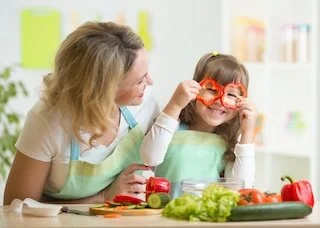
Food art, silly shapes, and colorful arrangements aren't just aesthetically pleasing for Instagram. They create excitement around food. Kids are more likely to try foods they've arranged into a funny face, a dinosaur, or a rocket ship. Turn apple slices into a sun. Make a veggie garden out of hummus and cucumbers. Build a house out of whole grain crackers and cheese.
This approach taps into children's natural creativity and removes the pressure that often makes trying new foods so stressful. When food is play, it stops being a threat.
3. Grow Something
Even a small pot of cherry tomatoes on a windowsill can fundamentally change how a child relates to food. When kids grow their own produce, whether in a backyard garden, a school plot, or a tiny container on an apartment balcony, they develop a connection to where food comes from. They water it, watch it grow, and then get to eat it. That kind of hands-on learning is irreplaceable.
Gardening also opens the door to bigger conversations about ecosystems, soil health, and how the food we eat affects the planet. Big ideas for little minds, and kids absorb it all.
4. Use Storytelling and Characters
Kids connect with characters. If you want to explain why protein matters, don't give them a biology lesson. Give them a story about a superhero who gets their powers from beans and eggs. Framing nutrition through narrative makes abstract concepts concrete and memorable.
This is exactly the philosophy behind well-designed nutrition education resources for kids: using characters, stories, and visual metaphors to make the science of food feel like an adventure.
Introducing: The Let's Learn Nutrition Activity Book Concept
One of the most effective tools for nutrition education outside the kitchen is a well-designed activity book, something kids can interact with, not just read. The Let's Learn Nutrition activity book concept is built around exactly that idea: giving kids an engaging, hands-on way to explore food groups, understand their bodies, and build lifelong healthy habits through games, drawing prompts, puzzles, and simple experiments.
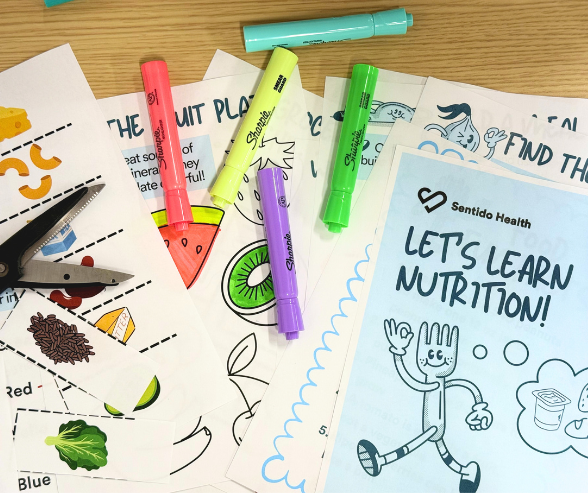
Here's what a great kids' nutrition activity book looks like in practice:
Color Your Plate Challenge: Kids are prompted to draw or color a balanced plate that covers all major food groups.
Food Detective Pages: Kids become investigators by sorting foods by group, circling fruits and vegetables in a scene, and learning how to read a nutrition label.
Build-a-Meal Activities: Using cut-out food cards or drawing prompts, kids design their own balanced meals. They practice combining a protein, a grain, a vegetable, a dairy item, and a fruit.
Where Does It Come From? Pages: Tracing food back to its source is endlessly fascinating for kids. Where does milk come from? These pages connect kids to the bigger food system in an age-appropriate way.
Movement Challenges: A great activity book doesn't just cover food. It connects nutrition to energy, movement, sleep, and mood, helping kids understand that taking care of their bodies is a whole picture, not just what they eat.
My Food Journal Pages: Simple, low-pressure prompts that encourage kids to notice what they're eating, how it makes them feel, and what new foods they're curious to try. This builds self-awareness without ever veering into calorie-counting or restriction territory.
The Let's Learn Nutrition approach works because it meets kids where they are: in their imagination, their creativity, and their natural desire to learn through doing.
Tips for Parents and Educators This National Nutrition Month
Whether you're a parent navigating picky eaters at home or an educator bringing nutrition into your classroom, here are some practical ways to make the most of National Nutrition Month this March:
Host a Rainbow Challenge: Dare kids to eat one food of every color in a single day. Red strawberries, orange carrots, yellow corn, green cucumber, blue blueberries, purple grapes. Make it a game. Track it on a chart. Celebrate when they hit all the colors.
Visit a Farmers Market: Even a single trip to a local farmers market can shift a child's perception of food entirely. Let them pick one unfamiliar vegetable to take home and try. Give them agency and watch their curiosity light up.
Read Food-Focused Books Together: There are wonderful children's books centered around food, farming, and nutrition. Reading together opens the door to conversations that feel natural rather than forced.
Start a "New Food of the Week" Challenge: No pressure, no judgment, just one new food introduced per week. Some will be hits. Some won't. But the habit of exploration is what matters.
Use the Activity Book as a Starting Point: Pull out the Let's Learn Nutrition activity book on a weekend afternoon. Let kids decorate their pages, use stickers, and decide what challenges and activities interest them.
Connecting Kids with Nutrition
At the end of the day, nutrition education for kids is about more than vitamins and vegetables. It's about helping children grow up feeling confident, curious, and connected to the food they eat. It's about building a foundation of habits and attitudes that will serve them for life, not because they were told what to eat, but because they discovered for themselves that food is interesting, food is delicious, and food is something worth caring about.
This National Nutrition Month, let's commit to making that education joyful. Let's cook together, play with our food, grow something in the dirt, and hand kids an activity book that makes learning about nutrition feel like an adventure.
Discover more nutrition education by reading these Sentido blog posts: